




Skoll Foundation


International Bridges to Justice

Skoll Entrepreneur(s): Karen Tse
Focus Area(s) Addressed: Peace and Human Security
Award Year: 2006

(Click here to print)

DESCRIPTION:

A former public defender and ordained minister, Karen Tse moved to Cambodia in 1994 to train public defenders. “I remember peering through a prison cell and talking with a boy who had been detained and tortured,” she recalls. “He was just a boy who had tried to steal a bicycle and he had no one to defend him.” At that time, there was little Karen or others could do. Governments throughout Asia, now under pressure from human rights activists, have passed laws outlawing torture and providing citizens with basic rights. By helping countries develop criminal justice systems to implement these laws, International Bridges to Justice (IBJ) is dramatically improving and even saving the lives of everyday citizens.

IMPACT AS OF JAN. 2013:

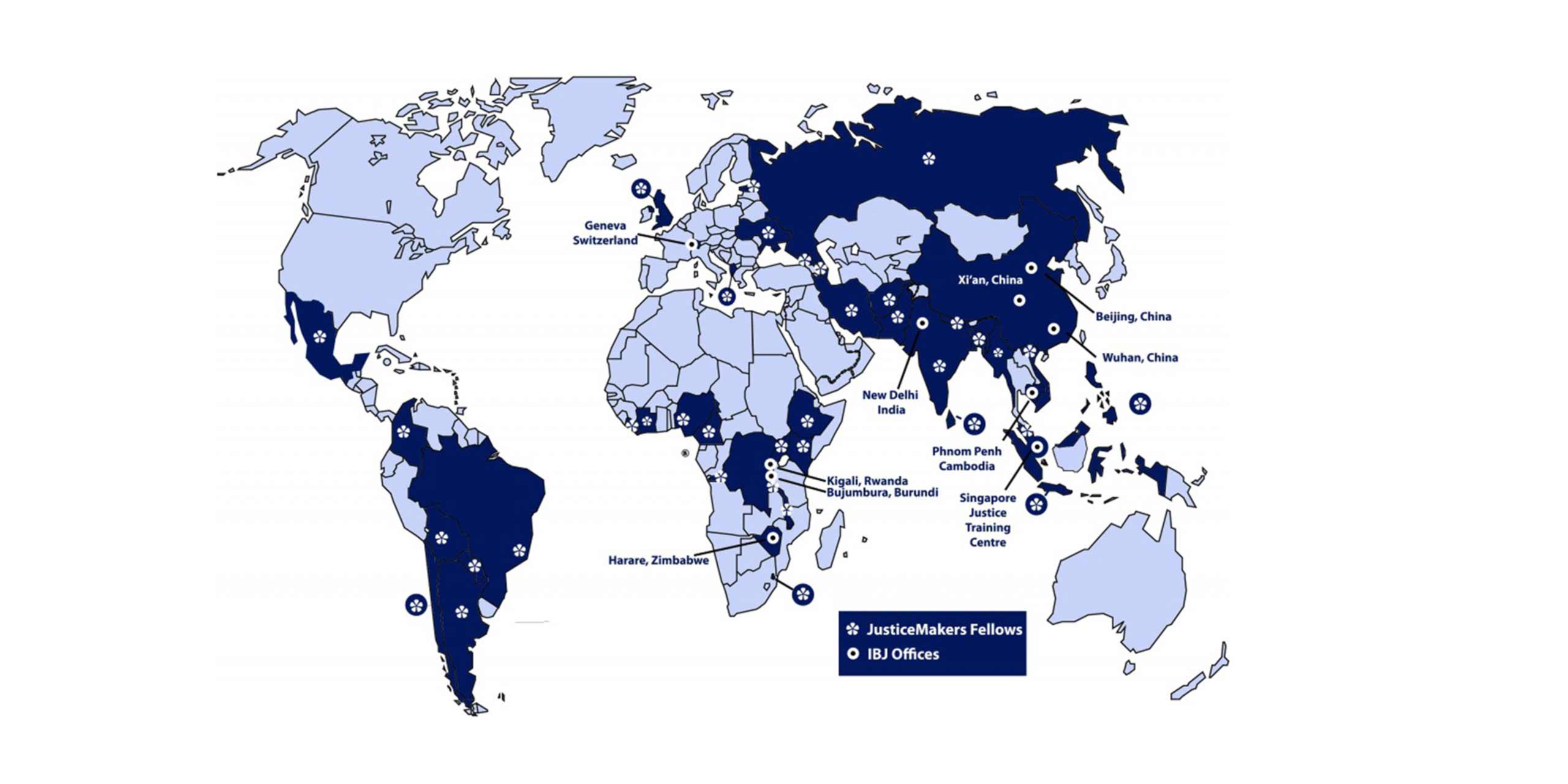
  • IBJ has in-depth programs in Burundi, Cambodia, China, India, Rwanda, and Zimbabwe, in which it trains defense lawyers, persuades justice sector officials to create fairer criminal justice systems, and educates the public about their legal rights.
  • IBJ’s JusticeMakers program has provided funding for innovative projects in 25 countries and built a global platform now used by more than 6,000 lawyers and human rights defenders.
  • In Dec. 2011, TED and the Huffington Post published the video of a talk Karen Tse gave at TED Global on the urgent need to end investigative torture. They ranked the video #3 in their series called “BEST OF TED 2011: A Countdown of 18 Groundbreaking Ideas to Reshape the World in 2012.”
  • IBJ has advanced the legal skills of thousands of lawyers through training and has educated millions of people to demand their legal rights.


SEE THEIR WORK IN ACTION:

My name is Karen Tse, and in the year 2000 I founded International Bridges to Justice.

IBJ is dedicated to ensuring that every man, every woman, every child throughout the world has effective defense counsel.


Most countries, almost virtually every country in the world has passed new laws saying you have a right to a lawyer, you have right not to be tortured.
But unfortunately in even many of these countries, people are regularly detained and tortured on a daily basis.

Lawyer and public defender Karen Tse first came face to face with torture in Cambodia in the mid-nineties.
She had to help rebuild a legal system that was utterly decimated by the reign of terror of the Khmer Rouge.

Cambodia is a place that is synonymous with A very torturous past.
A place where there was absolutely no rule of law and where millions of people were killed with absolutely no presumption of innocence.

Over a decade ago, in 1994, when I first arrived in Cambodia, there were less than ten attorneys in the country.
At that time, there were laws on the books that said you have a right to a lawyer, you have a right not to be tortured.

But, practically everyone who came through that prison system, practically every one I met said, yes, I was tortured.

With Cambodia's legal system in tatters, torture was still viewed as the quickest, cheapest way for police to extract a confession from the accused, guilty or not.  Former police official Oak Van Dedt regularly witnessed the use of torture.

Our superiors demanded a confession from every suspect who was brought in.
The only way we knew how to get it was to use force and torture the suspect until they confessed.

To many throughout the world, it seemed a hopeless situation.
But Karen Tse was convinced that Cambodia was ripe for change.

From her experience as a public defender, Karen knew that people who have effective legal counsel are far less likely to be tortured.

And so she set out to train as many public defenders as possible. Soon, she and her fellow defenders were conducting rights campaigns in prisons writing manuals for judges and lawyers on how a legal system is supposed to work, and helping to build some of Cambodia' s first arraignment courts.

What IBJ does is to create the architecture and infrastructure so that the letter of the law isn 't just a piece of paper, but be comes a living, breathing reality in the everyday fabric of life.

Today, is a trained public defender, working with IBJ to create an entirely new way of doing things.


IBJ plays a vital role in Cambodian society.
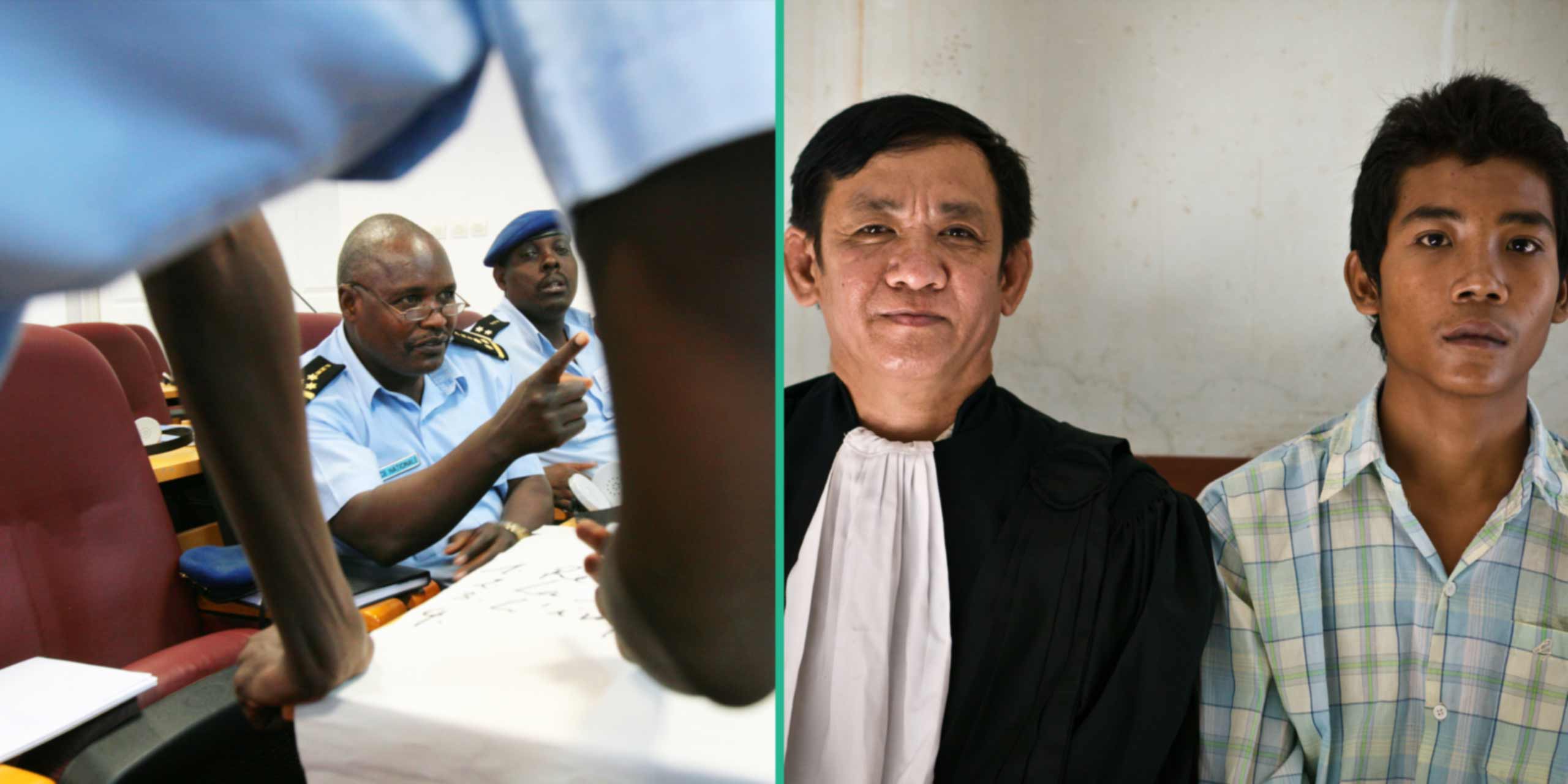
He trains lawyers to represent clients.

Teaches police how to seek evidence and also encourages Cambodians to demand that their rights be respected.

Inspired by what it has been able to accomplish in Cambodia, IBJ is now training and supporting public defenders around the world.

In China, a country striving to improve its legal system, IBJ has established permanent resource centers and trained thousands of defenders who are working to bring justice and human rights to China's 1.3 billion citizens.

In China we did one advisement of rights campaign.
And we had 3000 members of the Youth Communist League, Chinese Youth Communist League.

We put up a poster, then it went from a thousand copies to ten thousand copies, to 360,000 copies, to over half a million. And we have had campaigns for the last few years in every single province in China.

One of the most. encouraging signs for IBJ has been how genuinely eager governments in Asia, Africa and Latin America have been to work with IBJ, to adopt the organizations blueprint for building more humane justice systems.

Equally encouraging is the growing number of public defenders and law firms joining IBJ's ranks.

And we see that, really for the world wide community right now. It's going to be everyone who stands up to do this. It's going to be government officials who have been very welcoming.

It's going to be corporations that lend their support. It's going to be businesses that realize that if there has to be institutionalized rule of law in terms of hopes for globalization.

It's almost like seeing all the rocks when you're here at Anchor Watch. And each one, you know, has a number and a place in the architecture of it. And each one will form a very, very important role for the base. Human rights in this day and age is in about the extraordinary, it's not about the impossible.

It's about building the simple building blocks and being committed to just doing the every day grunge work, by putting the system in place.


So that we can really create a culture, where the rule of laws and the fabric of society.
 

© 2013 Skoll Foundation.