
Skoll Foundation


Kiva

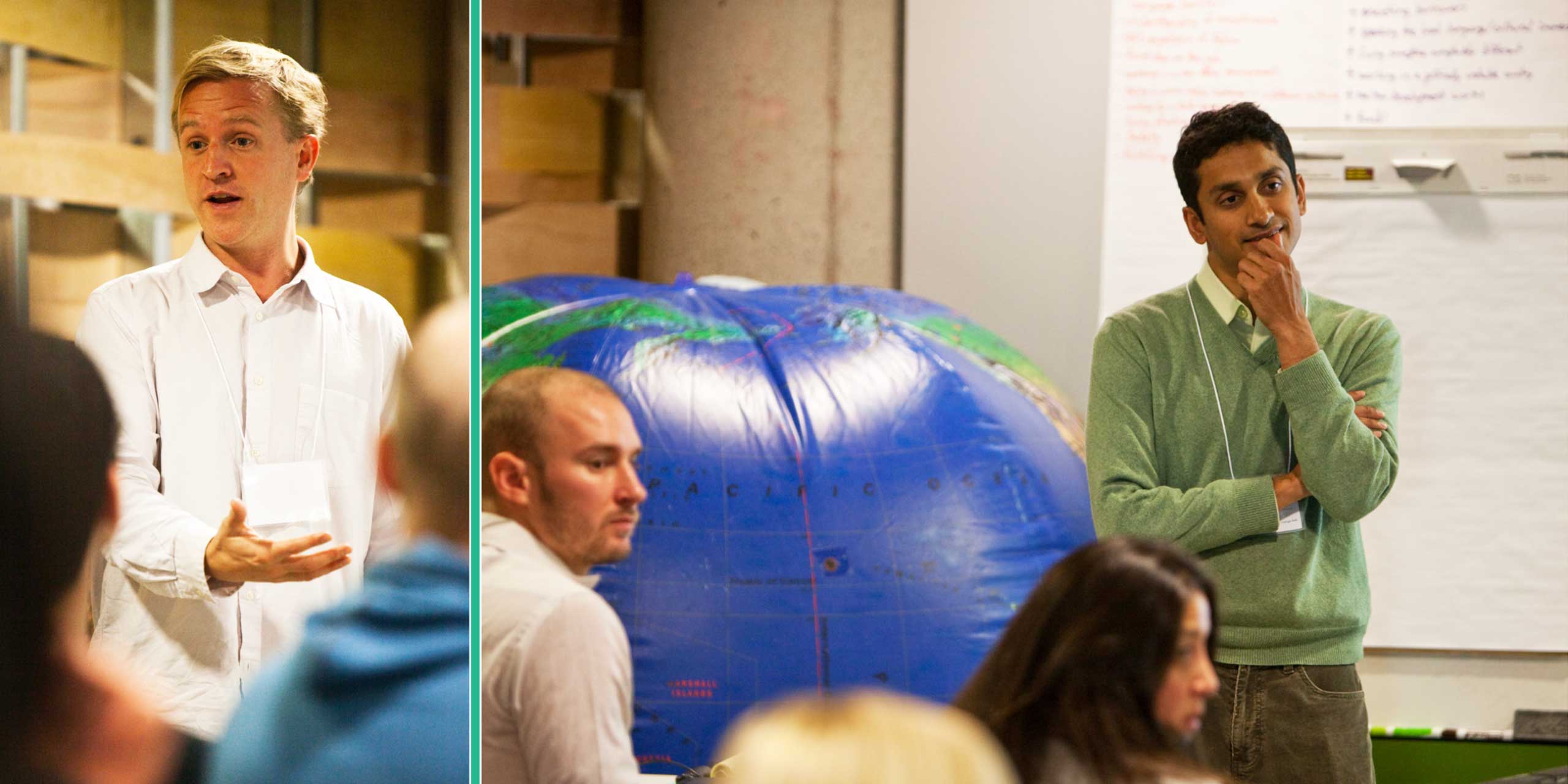
Skoll Entrepreneur(s): Matt Flannery and Premal Shah
Focus Area(s) Addressed: Education and Economic Opportunity
Award Year: 2008

(Click here to print)

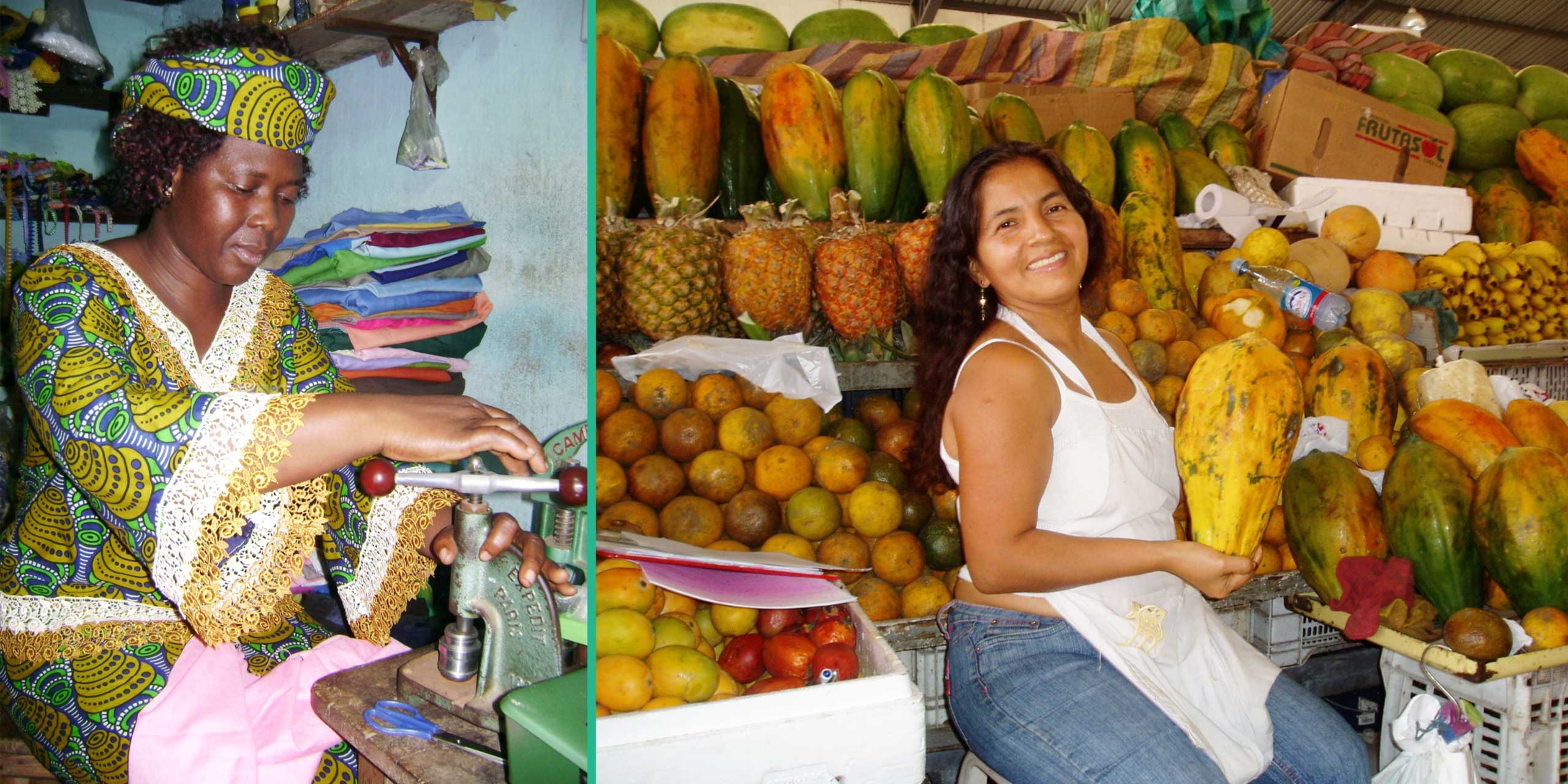
Kiva began after a trip to East Africa sparked an idea in the minds of Matt Flannery and his wife Jessica to help the poor start their own businesses. Their personal interest grew into something larger that eventually found a home on the Internet. About the same time, Premal Shah of PayPal was similarly inspired while consulting in microfinance. After posting a small loan application on eBay, Premal became an early pioneer of Internet microfinance. Premal and Matt connected over the concept of Internet microfinance and have together built Kiva’s innovative approach.

IMPACT AS OF MAY 2013:

  • Kiva’s unique online micro-lending marketplace is a true social business which provides a service for philanthopic individuals looking to create the greatest impact with their philanthropy earmarked funds. Lenders choose to make an optional donation to Kiva for facilitating their loan to an entrepreneur, creating a sustainable business model for Kiva.
  • The social impact is two-fold: entrepreneurs receive start-up or expansion capital which gives them an opportunity to create a business to lift themselves out of poverty, while the microfinance institutions Kiva partners with gain access to a new source of cheap, soft debt capital.
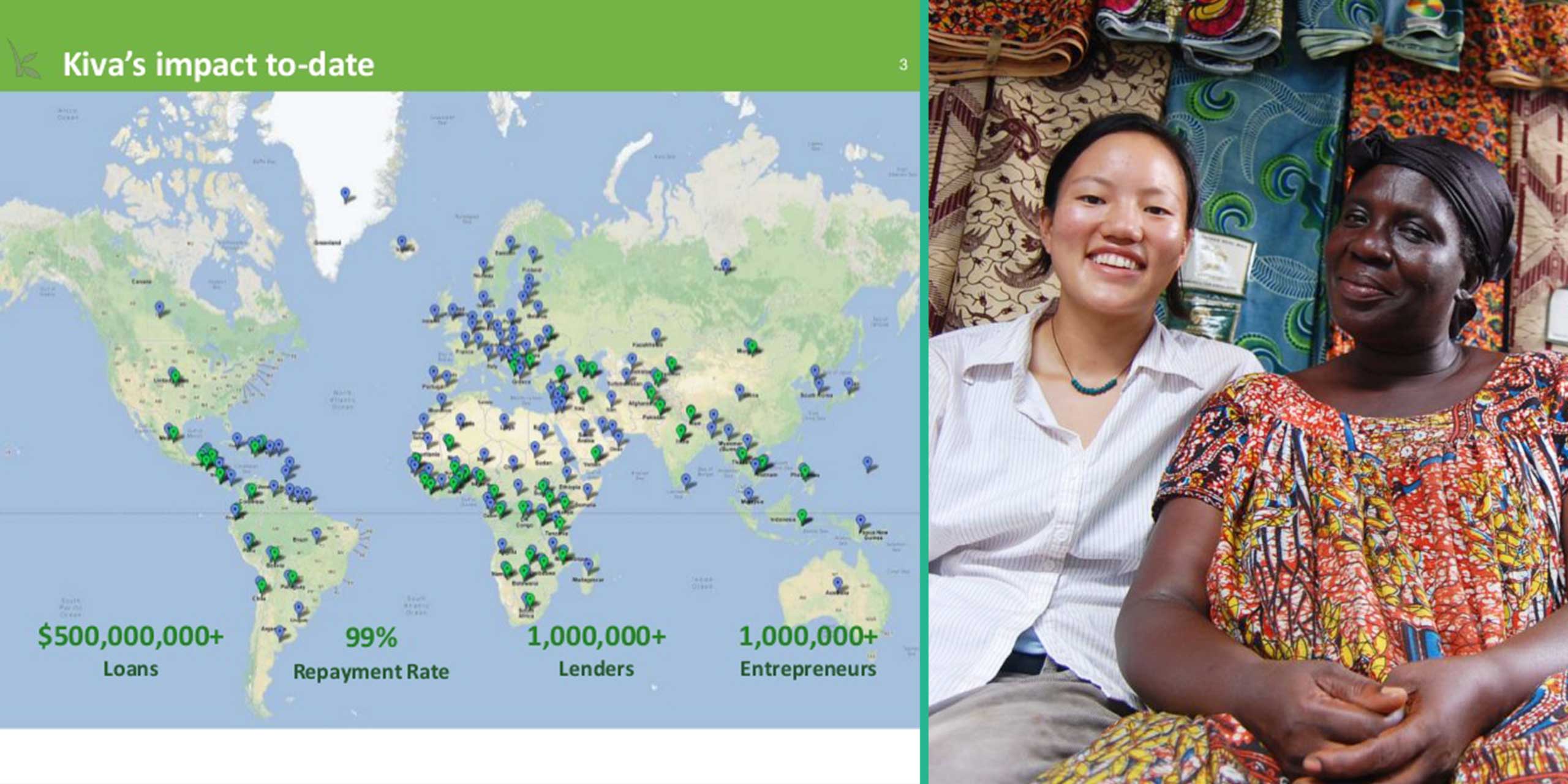
  • Total amount lent through Kiva: $430 million
  • Kiva Users: 1,348,139
  • Kiva Users who have funded a loan: more than 900,000
  • Borrowers funded through Kiva: 964,324
  • Number of loans made through Kiva: 518,534
  • Kiva Field Partners (microfinance institutions): 183
  • Countries where Kiva Field Partners are located: 67
  • Repayment rate: 99.03%
  • Average loan size: $402.22
  • Average loans made per Kiva lender: 9.18
In Africa alone:
  • Kiva has fully funded ~ $106.6m in loans in Africa
  • Footprint in 24 African countries, through 50 Field Partners
  • Those loans have gone to 340,820 borrowers
  • They have been active in some post-conflict countries like  Sudan, Congo, Mali, and Burundi.

SEE THEIR WORK IN ACTION:

Kiva.org provides loans to small businesses around the world via the Internet.
Anyone can use the Kiva website to lend their own money to an entrepreneur that needs their help.
The businesses range from taxi drivers in Kazakhstan to pig farmers in Cambodia.

Matt Flannery founded Kiva in 2005.
He and Kiva president Premal Shah are the driving forces behind this social enterprise.
Premal gave me a guided tour.

Basically, you can go online to www.kiva.org and essentially sift through entrepreneurs in need of loan.
And when you sift through these entrepreneurs, you can actually read about their life story.
And then when you make a loan to someone, you can follow their story and how their business is growing.

I made the trip to Tanzania to see the impact of receiving a Kiva loan. Dar Es Salaam, the business capital of Tanzania.

It's one of Africa's fastest growing cities, and it's overflowing with small businesses and budding entrepreneurs, who for many, a small loan of a few hundred dollars could make a huge difference.

Rita, a Kiva coordinator for one of their field partners, took me to meet a Kasaba seller whose life had been changed by one such loan.

And what is she selling here?

"She's selling Kasaba. She fries it, and then she sells it to the people who are having breakfast."

And how important, Rita, has the loan been for Atuna?


"I used to sell kasaba for two hours, and then I was out of stock."

"With the loan I can buy more stock and work for four hours. And now I'm selling ice cream as well."

So, she's expanding the business.
Good. This is very good.

"So, she has more products to sell, and she'll appeal to more people."

She's making really good progress, I think.

Just looking into Atuna's eyes, you can tell that this loan has really made a difference.

She's a person who has a business and much to my surprise, she's expanding it, bringing in other products.


Spike potato, right.
Its like a potato. It's not bad, like a sort of big french fry.

Next, I was about to meet another business that had been a kick-started by a Kiva loan from lenders around the globe.

Very nice to meet you and this is your shop, isn't it?

Nama runs a pharmacy.
She also sells clothes door to door.

So, when did she decide to expand her business?


After I got the loan, I decided to expand.
With the capital, I bought more clothes and I opened my pharmacy. So in addition to the pharmacy and the clothing, you're a singer also.

In the evening, during the summer, when the sun shines, I sing in the band.


She sells the clothing, she has the pharmacy, and she sings.
Which one is her real passion?

I have been a singer for so many years, so singing is a big par t 0f me. But I've also seen people make a success of business, and that is my dream. I want to be a successful businesswoman too.

Neema has lots of business ideas.
Diversity will strengthen her income. I just hope she doesn't spread herself too thin.

I'm off to visit Atuna at home, as I hear she also has other lines of work.

And, I want to know about the impact of the loan on her life outside of business.

So Atuna, how did the loan help you out?

Now I have the money to take my child to school.
I can pay for her transport, and tuition. And for me, I have money for my personal use, expenses. And this helps. Ofoshi took out a loan. Atuna, whose husband left her to raise her daughter alone, was moving from one neighborhood to the next, selling illegal alcohol. Now she sells cassava, ice cream, and she has a booming fabric business.

It is time to practice my sales technique as I join Atuna selling fabric.
I'm sure I'll be a great help.

To her she's a supermodel.

Yeah, she lives like that.

Ask her if she's going to buy it.

Is she?

Oh good! That's two sales. Bravo!

If you were selling cassava, how long would it take you to make the same money that you make by selling fabric?

The profit from cassava is very different.Fabric is better, because I get my stock at half the price I sell it for.

Good, good.

Well, let's go on to your next sale.

Not only is Atuna's business backed by borrowed money, but she herself extends credit to her customers. A clever strategy, but not without risks.

What happens if somebody can't pay?

They usually pay me every day, and within two weeks all payments should be finished.

Bravo! Bravo!

You deserve congratulations. You really do.

If you want to help an enterprenuer like Atuna, then get involved and visit the Kiva web site at www.kiva.org,
and make a loan.
 

© 2013 Skoll Foundation.