



Resilience Beyond COVID-19 in West Africa
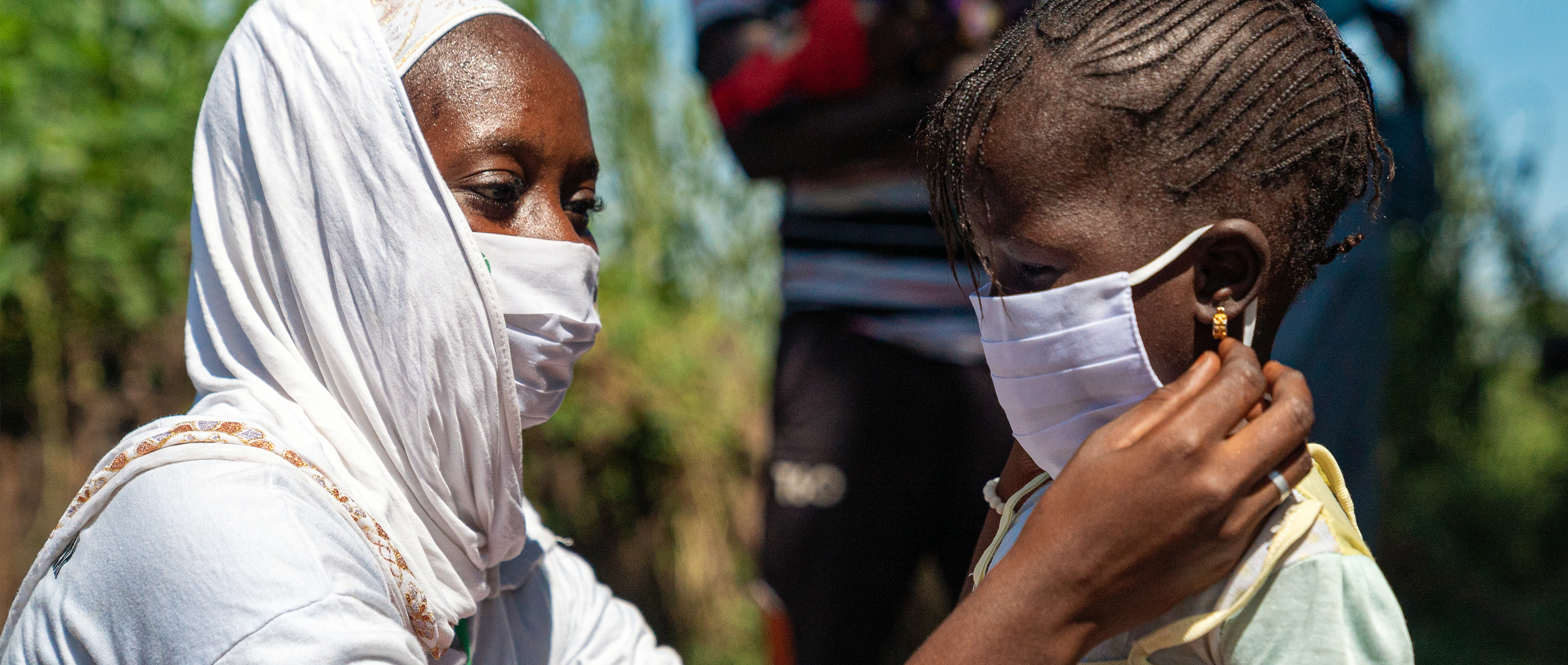
In March 2020, the COVID-19 pandemic brought about big changes for Tostan, the West Africa-based organization that has partnered with communities at the grassroots for almost 30 years to…


Tostan’s mission is to empower African communities to bring about sustainable development and positive social transformation based on respect for human rights. Tostan means “breakthrough” in the Wolof language of West Africa. Since 1991, Tostan has brought its three-year Community Empowerment Program (CEP) to thousands of communities in 10 African countries: Burkina Faso, Djibouti, The Gambia, Guinea, Guinea Bissau, Mali, Mauritania, Senegal, Somalia, and Sudan. CEP empowers communities to change their own lives by teaching them about human rights and dignity in a way that is respectful, inclusive, holistic, and sustainable. Participants help to spread the knowledge they gain through their social networks. In this way, that knowledge becomes the catalyst for positive change on a community, regional, and national level. Thanks to CEP, more than 7,200 communities have declared that they will abandon female genital cutting, forced marriage, and child marriage. Communities have witnessed economic improvement, the emergence of female leadership, increased enrollment of girls in school, and better protection of maternal and child health, among other benefits.
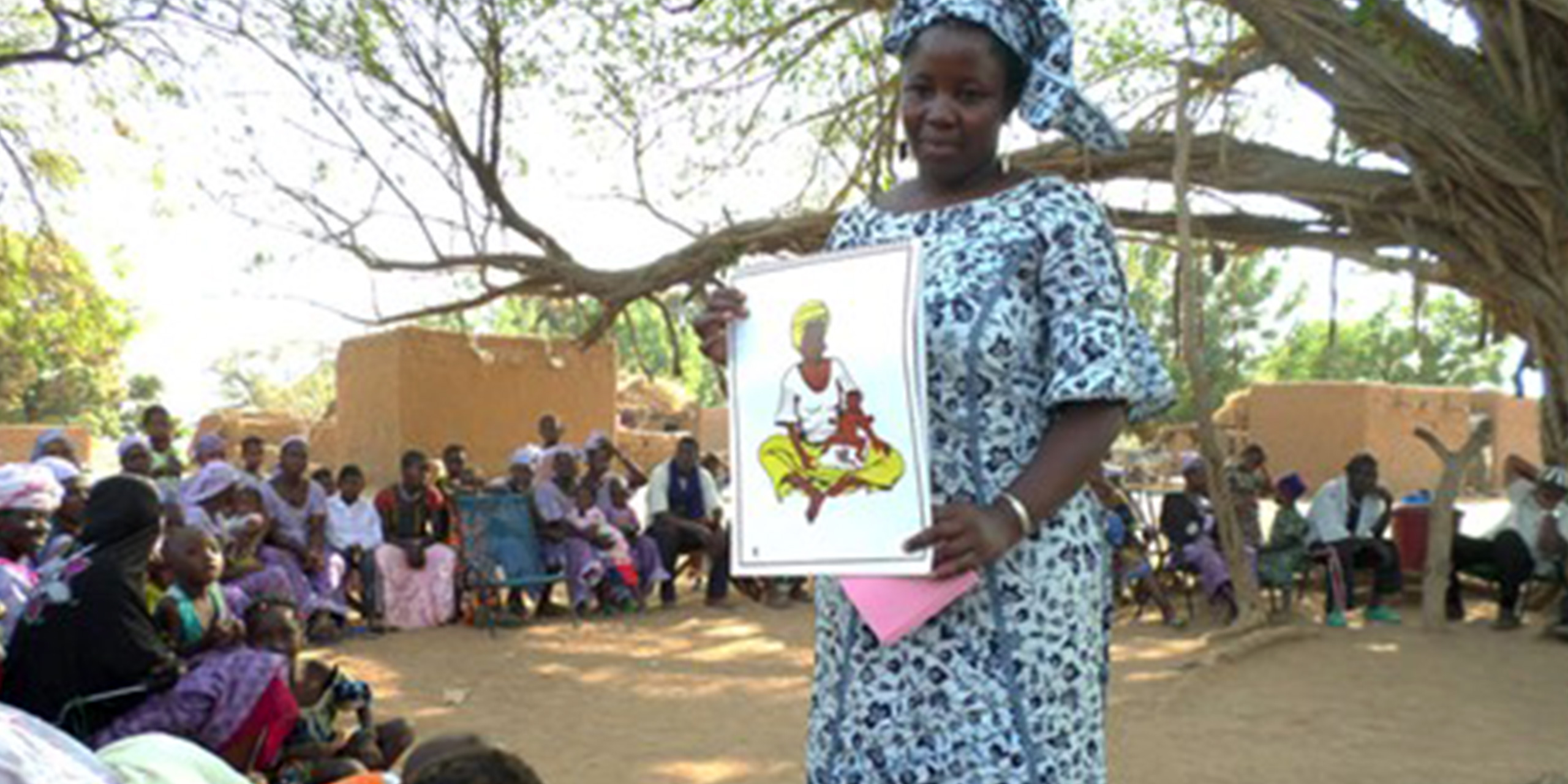
A Tostan facilitator in Mali engages participants in discussing the importance of using the Oral Rehydration Solution to prevent dehydration.
More than 200,000 community members have participated in Tostan Community Empowerment Programs.
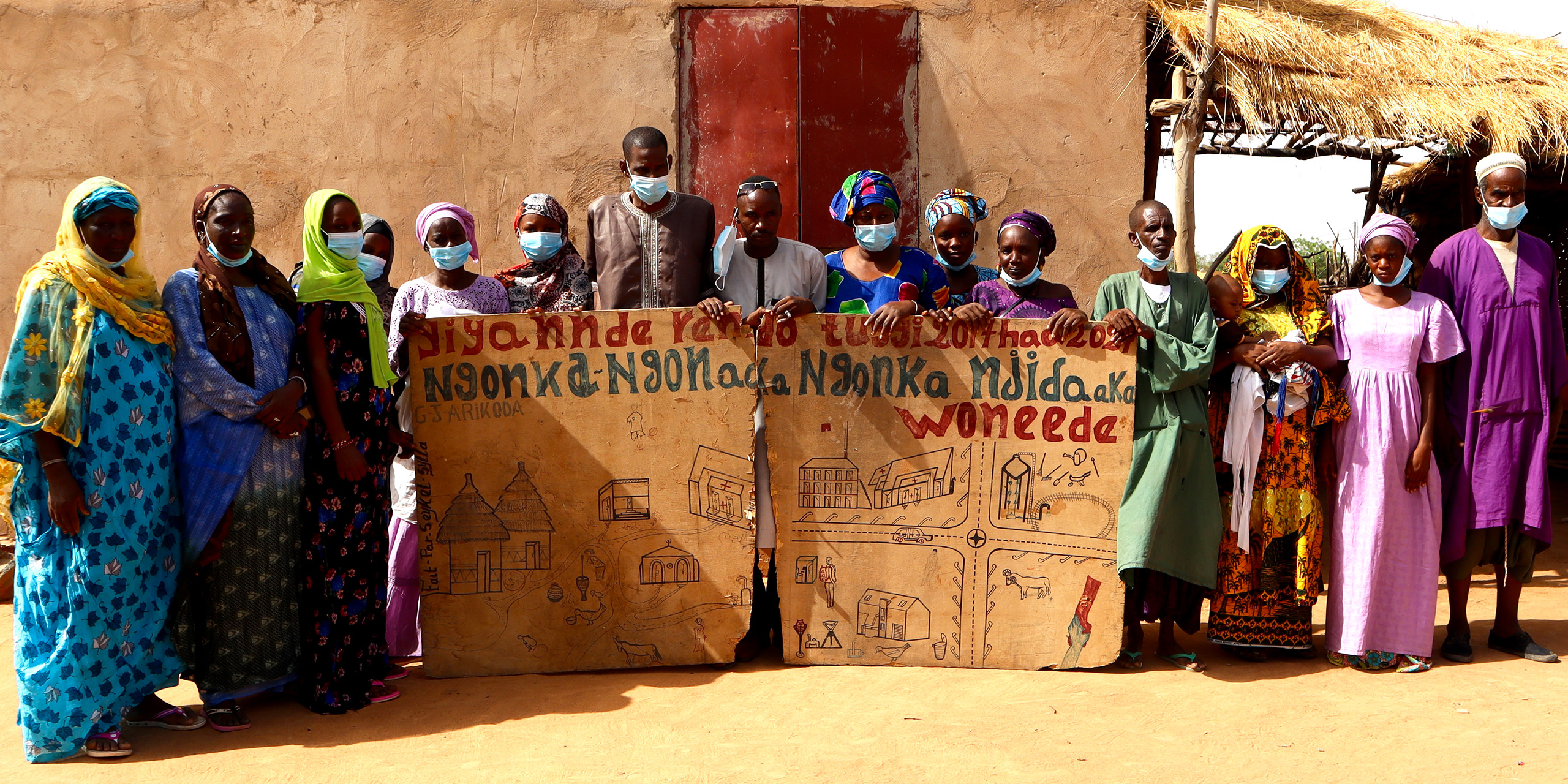
Members of the Community Management Committee from the village of Arikodaa, share their vision map, which they developed together as part of the Community Empowerment Program.
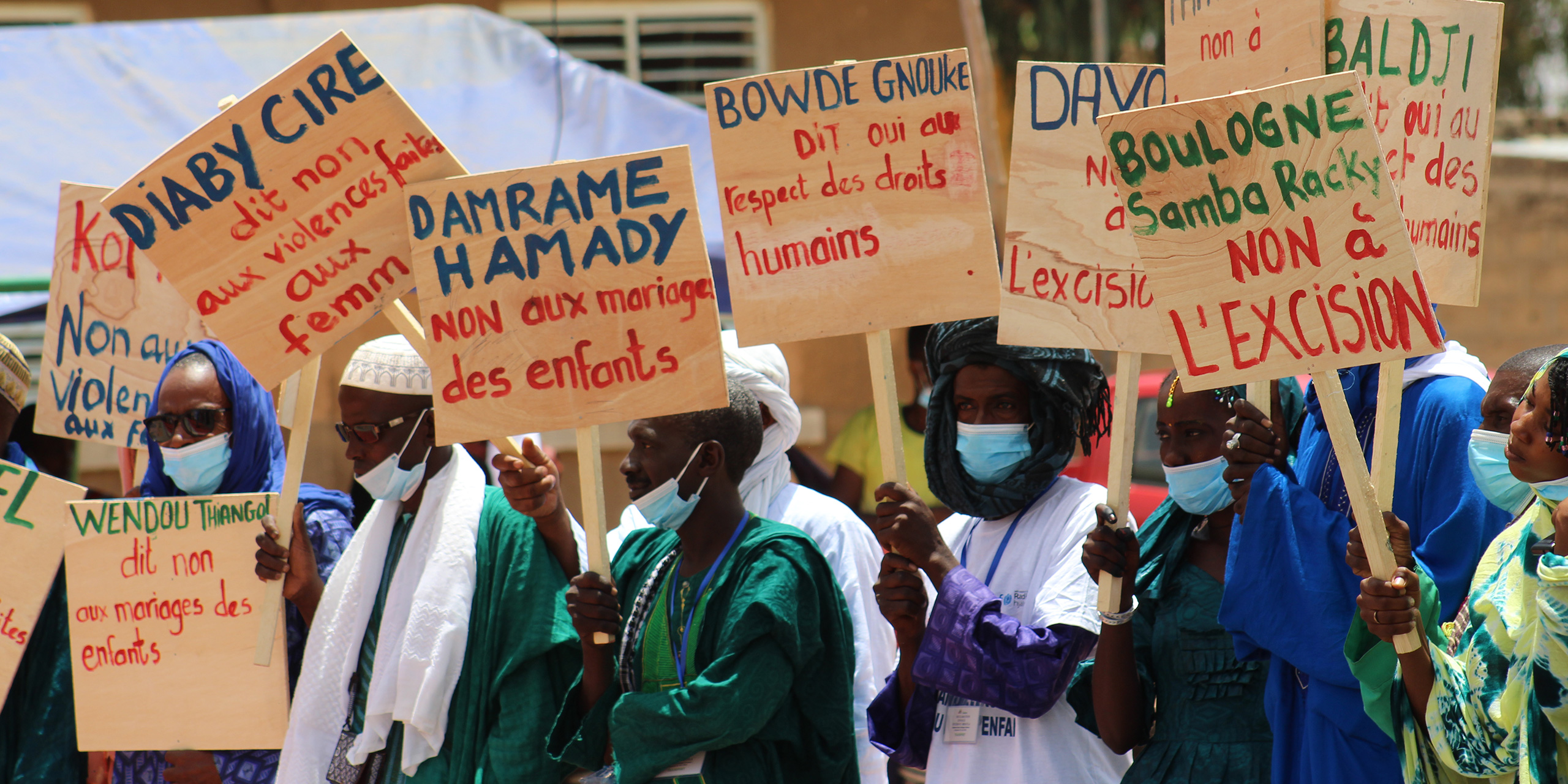
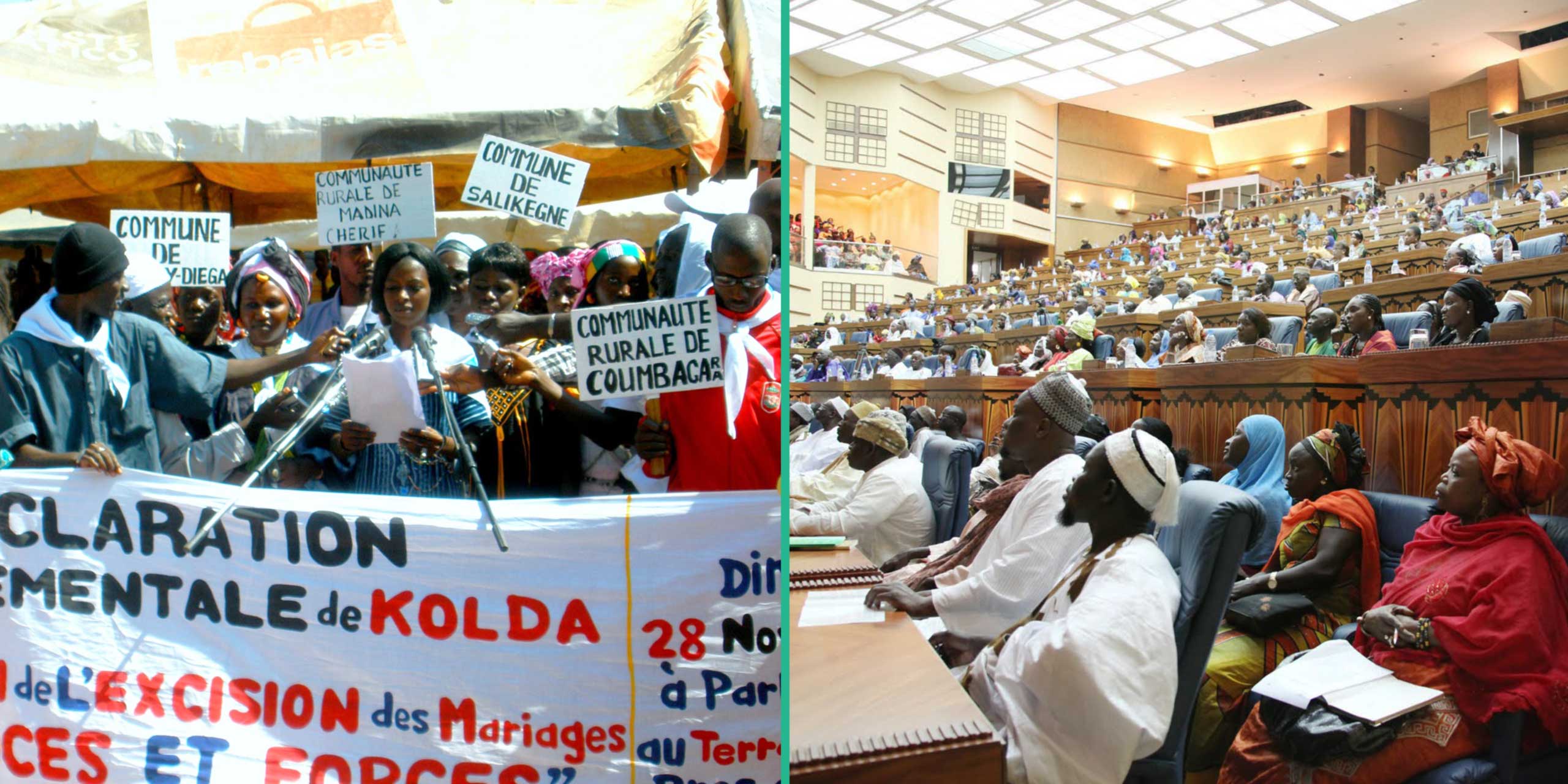
Leaders representing 60 villages in the Department of Matam, in Senegal, gathered for a public declaration to publicly state their intention to abandon female genital cutting and child marriage.
Communities come to understand social norms as something they can choose to change, to become healthier, more prosperous, democratic, and literate.
Demonstration and Replication
Change expands as community leaders learn from peers and decide to begin their own programs.
Founder, Tostan
Molly Melching moved from the US to Dakar in 1974, and has lived and worked in Senegal ever since, dedicating her life to the empowerment of communities at the grassroots level. In her first years in Senegal, Molly was struck by the way that development agencies often excluded villagers from the development process and how blindness to Senegalese values and perspectives led to projects that were unsustainable and often failed. In response, she lived in a small rural village for three years and immersed herself in village life, building her knowledge of local culture and gaining the trust of the community. Together, with villagers who had never attended formal school, she created an original basic education program to respond to their needs and priorities. In 1991, Molly founded Tostan to continue and expand the program which has evolved into what is now called the Community Empowerment Program.
Molly is highly regarded for her expertise in non-formal education, human rights education, and social transformation, and has received widespread recognition for her leadership, including from Sally Osberg, Bunker Roy, Willy Foote, Nicholas Kristof, Bill Gates, and Hillary Clinton. In 2011, she was named one of the “150 Women Who Shake the World” by Newsweek and one of the “The Most Powerful Women in Women’s Rights” by Forbes magazine. In 2012, Fast Company named Molly within its "League of Extraordinary Women," which is comprised of 60 women who are agents of change in their field. Nobel Prize-winning economist Amartya Sen, a member of the jury that awarded Tostan the 2007 Conrad N. Hilton Humanitarian Prize, has praised Molly’s “freshness of approach and ability to think differently,” while, in 2014, Melinda Gates named Tostan as one of the five best charities that benefit women and girls.


In March 2020, the COVID-19 pandemic brought about big changes for Tostan, the West Africa-based organization that has partnered with communities at the grassroots for almost 30 years to…
For nearly three decades, Tostan has co-created and implemented human rights based-educational programs with communities across the African continent that inspire large-scale movements leading to dignity for all. Founder of…
Some 200 million women and girls alive today have undergone female genital cutting (FGC). Every year, three million more women are violated with FGC—a massive, mostly invisible health and human…