



Skoll Foundation


International Center for Transitional Justice

Skoll Entrepreneur(s):
Award Year: 2009
Focus Area(s) Addressed: Peace and Human Security

(Click here to print)

DESCRIPTION:

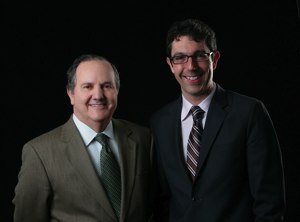
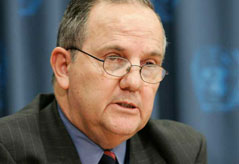
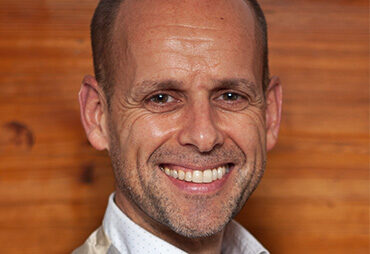
A native of Argentina, Juan Méndez came of age during a time of great upheaval in Latin America. As a result of his legal and advocacy work, he was arrested, tortured and exiled. He refused to be broken and dedicated his life to pioneering ways to protect human rights. Juan joined ICTJ as president in 2004. Paul van Zyl, a native of apartheid-era South Africa, committed to working against intolerance at a young age. He helped draft legislation to establish the South African Truth and Reconciliation Commission and was hired by Archbishop Tutu as its Executive Secretary. Paul co-founded ICTJ in 2001.

Please note that original award recipients Paul van Zyl and Juan Mendez have since left the organization. David Tolbert is now CEO of ICTJ. Paul now works at Peace Ventures: http://peaceventures.net and Juan is a Visiting Professor at the Washington College of Law, American University, in Washington DC.

IMPACT AS OF JAN. 2013:

  • ICTJ is working with partners in Tunisia to inform members of government bodies and judiciary tasked with investigating human rights violations of the former regime about relevant transitional justice practices employed elsewhere.
  • They worked actively with the World Bank to address relationships between justice, security and development in the 2011 World Development Report.
  • They provided technical assistance to Argentine prosecutors in helping to organize, prioritize, and provide public information about the significant number of pending prosecutions for abuses during the “dirty war” and supported analysis of why gender based crimes were slow to surface in criminal cases there.
  • They coordinated with several NGOs in Peru to help victims from rural communities engage with government on their demand for reparations, and provided technical advice to government agencies and advocates on compensation.
  • They analyzed the pitfalls of the de-Baathification process in Iraq and published research on lessons learned in several countries from vetting public servants involved in human rights abuses.
  • Building on the momentum of 2010’s Rome Statute Review Conference, ICTJ brought together ICC officials, justice experts, and development actors to address complementarity—how to take practical steps to support domestic prosecutions of international crimes. In Uganda, DRC, Colombia, Argentina, and other countries they are working with, justice acts to further this objective.
  • In Burma, they trained local activists in documentation of human rights abuses for future use in demanding accountability. With ICTJ’s help, the Network for Human Rights Documentation – Burma built a database of more than 3,000 records of human rights violations.
  • Learn more: http://ictj.org/about

ICTJ’s podcast is available on iTunes and www.ICTJ.org. This bimonthly podcast features leaders in human rights, international justice, rule of law and related fields discussing justice and accountability in transitional contexts around the world.


LEARN MORE ABOUT THEIR WORK:

Juan Mendez and Paul van Zyl, International Center for Transitional Justice.

Few people predicted the peaceful transition from apartheid rule to democracy that we've witnessed in South Africa over the last 15 years.
Much of the credit goes to the truth and reconciliation commission. The visionary transitional justice approach that helped the nation deal with the legacies of past atrocities and heal its people. The International Center for Transitional justice has now taken this innovative methodology global, bringing transitional justice specialists and practitioners together from diverse contexts to share knowledge offer comparative advice and technical assistance, and build local capacity.

ICTJ has helped create transitional justice systems in more than 35 countries, healing millions of human beings who thought they were beyond redemption.

Ladies and gentlemen, Juan Mendez and Paul Van Zyl.

Thank you very, very much.

When the military expelled me from Argentina after torturing and detaining me without trial, I was obsessed with stopping torture, liberating political prisoners, and finding this dis a para sios. Those taken from their families , never to be seen again.

At the end of the dictatorship, the mothers and the relatives of the disappeared were not only asking to have the their loved ones returned to them. They also wanted to know the truth and to see justice done.

My unforgettable mentor, Emilio Minone, articulated this demand as intrinsic to the nature and quality of the new democracy we were building.


Truth and justice is the name that victims give to what others in more abstract terms, like to call the rule of law.
Much later, as Kofi Annan's special advisor on the prevention of genocide, I saw first hand in their food. justice as an antadote to impunity for mass atrocities already committed, must play a central part in our efforts to prevent new violations from happening.

The ICTJ and our partners in 35 countries work specifically in this new horizon of human rights protection.

We assist societies moving from dictatorship to democracy or from conflict to peace, and we assist them to reckon with legacies of egregious human rights violations.

I am proud to work with dedicated, talented activists and scholars, all of them my ICTJ colleagues, but also many partners around the world. It is great to see new generations take on the fight for human rights, renew it with fresh ideas and teach a few things to those of us who are no longer human rights rookies.

I find it especially rewarding, to work shoulder to shoulder with Paul van Zyl, a brilliant, resourceful, highly organized dynamo of a human rights activist, and a justice entrepreneur. Thank you very much, thank you.
 

© 2013 Skoll Foundation.