Skoll Foundation


Building Markets (formerly Peace Dividend Trust)

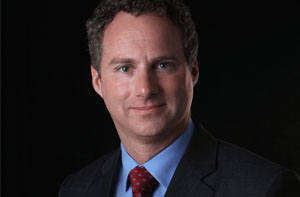
Skoll Entrepreneur(s): Scott Gilmore
Award Year: 2010
Focus Area(s) Addressed: Effective Development

(Click here to print)

In 2001, Scott Gilmore was working for the UN peacekeeping mission in Timor-Leste, on leave from the Canadian diplomatic service. He grew frustrated at how management and operational problems hampered the peacekeepers’ ability to achieve the strategic goals of the mission. Staffing practices, for example, prevented the UN mission from hiring local staff, despite high unemployment. Scott started an informal group of development and peacekeeping professionals to share lessons learned in the hope of improving operational efficiency. In 2003, he launched Peace Dividend Trust (PDT), now called Building Markets. Building Markets focuses on the nuts and bolts of how peace missions operate to help those in charge learn from past failures, disperse benefits as widely as possible, and implement innovative, yet practical approaches to economic development. Building Markets has grown to over 100 people, has offices in 5 countries and has operated in over 12 peace and humanitarian missions.

IMPACT AS OF JAN. 2013:

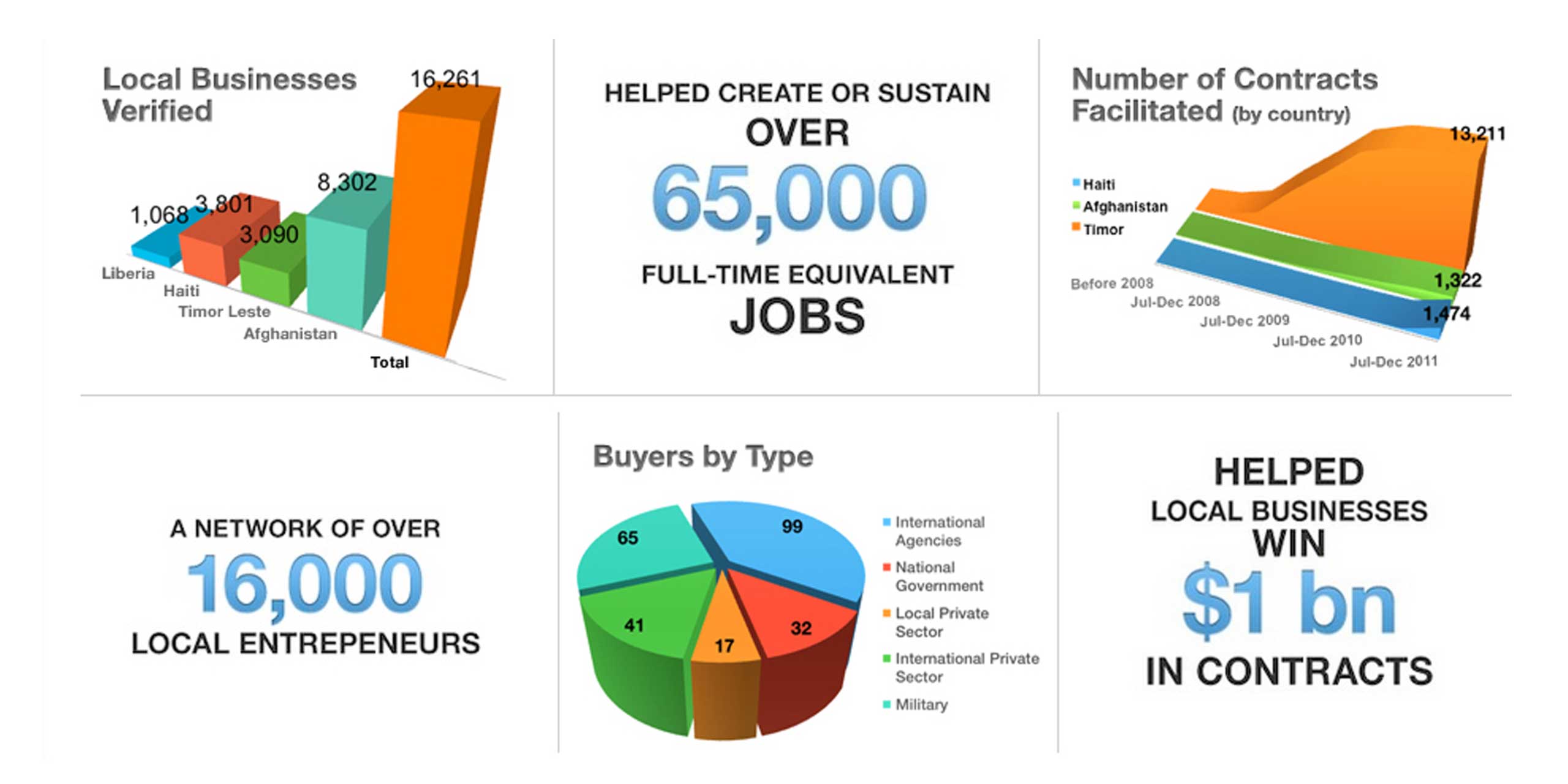
  • 16,261 local businesses were verified in Liberia, Haiti, TImor Leste and Afghanistan.
  • Building Markets has a network of more than 16,000 local entrepreneurs.
  • They helped create or sustain over 65,000 full-time equivalent jobs.
  • They helped local businesses win $1 billion in contracts.
  • They facilitated 1,474 contracts in Haiti, 1,322 contracts in Afghanistan and 13,211 in Timor from before 2008 to Dec. 2011.
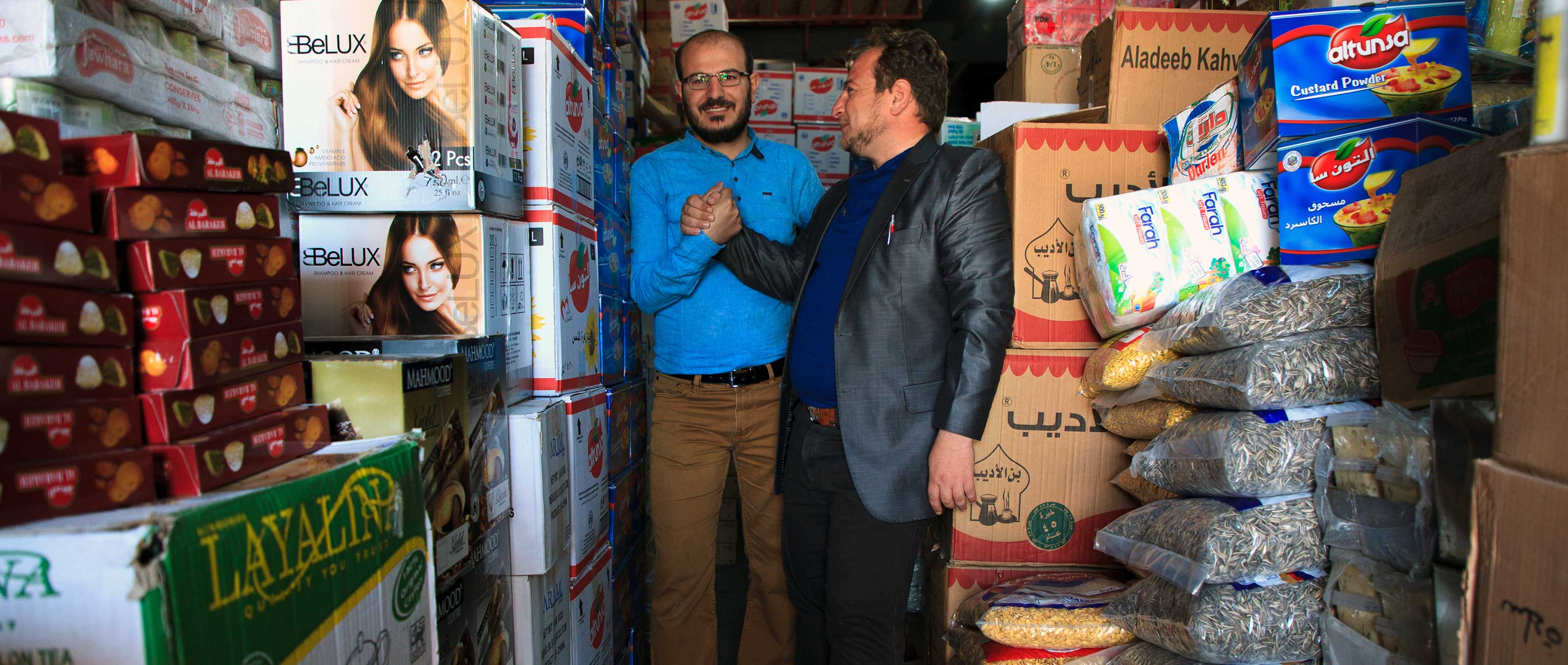
  • Their Peace Dividend Marketplace project in Afghanistan helped international agencies to increase their local spending by more than $375 million, creating thousands of jobs.
  • Their economic research to track donor spending, including the recent Spending the Development Dollar Twice report, has led the U.S., Australian, and British governments, as well as the United Nations, to adopt “Buy Local” policies.
  • When they saw a gap in the way the United Nations plans and launches peacekeeping missions, they helped them create the Mission Start-up Field Guide, which is now being used for all new peacekeeping missions.
  • Learn more: http://buildingmarkets.org/our-impact


LEARN MORE ABOUT THEIR WORK:

Tonight, we honor nine individuals representing seven organizations doing work in environmental sustainability , economic opportunity, community, development and conflict, resolution .

They work throughout the world in the US Africa, Indonesia, Latin America, Afghanistan and beyond. Jeff? Would you come join me?

Peace Dividend Trust, Scott Gilmore.

Too often we see the end of armed conflict is peace. But lasting peace requires healing. Systems that can help war torn societies back on their feet armed not with guns, but with the confidence to move forward.

Scott understands this, nearly ten years ago when he was working for the U.N. peacekeeping mission in Timor-Leste , Scott grew frustrated at how management and operational problems undermine such missions from achieving their ultimate goal.


The absence of violence and viable ultimately vital can state economic and political systems.
He started an informal group of development and peace keeping professionals to share how they could improve operational efficiency.

And in 2004 launched Piece Dividend Trust.
The organization leverages the learning of past failures, working to disperse the benefits of humanitarian assistance as widely as possible and implement innovative economic development approaches

PDT's approach is taking hold.
Embraced by U.S. authorities in Afghanistan, it led to the groundbreaking Afghan first policy. Today PDT is actively is engaged in transforming twelve peace and humanitarian missions around the world.

Scott Gilmore.

Wow.
You know I talks for them. And I didn't get in, so it's comforting to know that there's more than one way to the Chaldonian. You know? Yeah.

I'd first of all, I have to thank, I was told not to, but I have to thank Sally, and I have to thank Jeff, and the Skoll Foundation and the Skoll staff, and my wife Catherine, who just flew in, for her patience over the years over the long travel.

I am going to say few quick words about the dramatic impact of this award on Peace Dividend Trust.

First of all, I need to preface this by saying, the only real skill I have is my ability to find people who are smarter than me and work harder than me and get them to work with us, and two of them are here tonight, Edward Reese and Jennifer Holt. And the first impact of this award has been to validate their extraordinary efforts over the last five years. And for that I'm very grateful.

The second impact, of course, is that the Skoll family has really challenged us to ask some difficult questions about what we do, and what works, and how we can make that better, and how we can replicate that.

And in answering those questions which set ourselves a new road map of the last few months.
Which brings me to the third impact, which is, the Skoll Foundation's given us the resources to start moving down that path.

And it's not just the money, which we're very grateful for, but perhaps even more important is the access to the Skoll family, and experience and wisdom of the people in this room.

I can say without any exaggeration that the conversations I've had in the last three days have, will make dramatic impact on where PDT's going in the years ahead. But finally, the big impact, the one that am relishing the most is this is giving us the resources to cause a little bit of trouble.

What we do is occasionally controversial and it's occasionally unpopular because it suggests that some of the institutions we love the most, like the United Nations, some of the things we love the most, like, aid, don't work that well.

And, there are some things that we would really like to do to expose the light, or put some light on some of those, most glaring inefficiencies, and to make some larger government donors very uncomfortable with some of other things that they've allowed to take place.

And so, I think it is the Skoll Foundations' desire to see equilibrium change which is the most important thing for us, because what its going to allow us to do is give us a fighting chance to start to shift that balance.

So thank you very much.
 

© 2013 Skoll Foundation.