![]() |
![]() |
![]() |
||||||||||||||||||||||||||||||||||||||||||||||||||
| Home > Skoll Award Recipients > 2005 Social Entrepreneurship Award Recipients > | ||||||||||||||||||||||||||||||||||||||||||||||||||||
|
Recipients of 2005 Skoll Awards for Social EntrepreneurshipBarefoot College (Social Work and Research Centre)
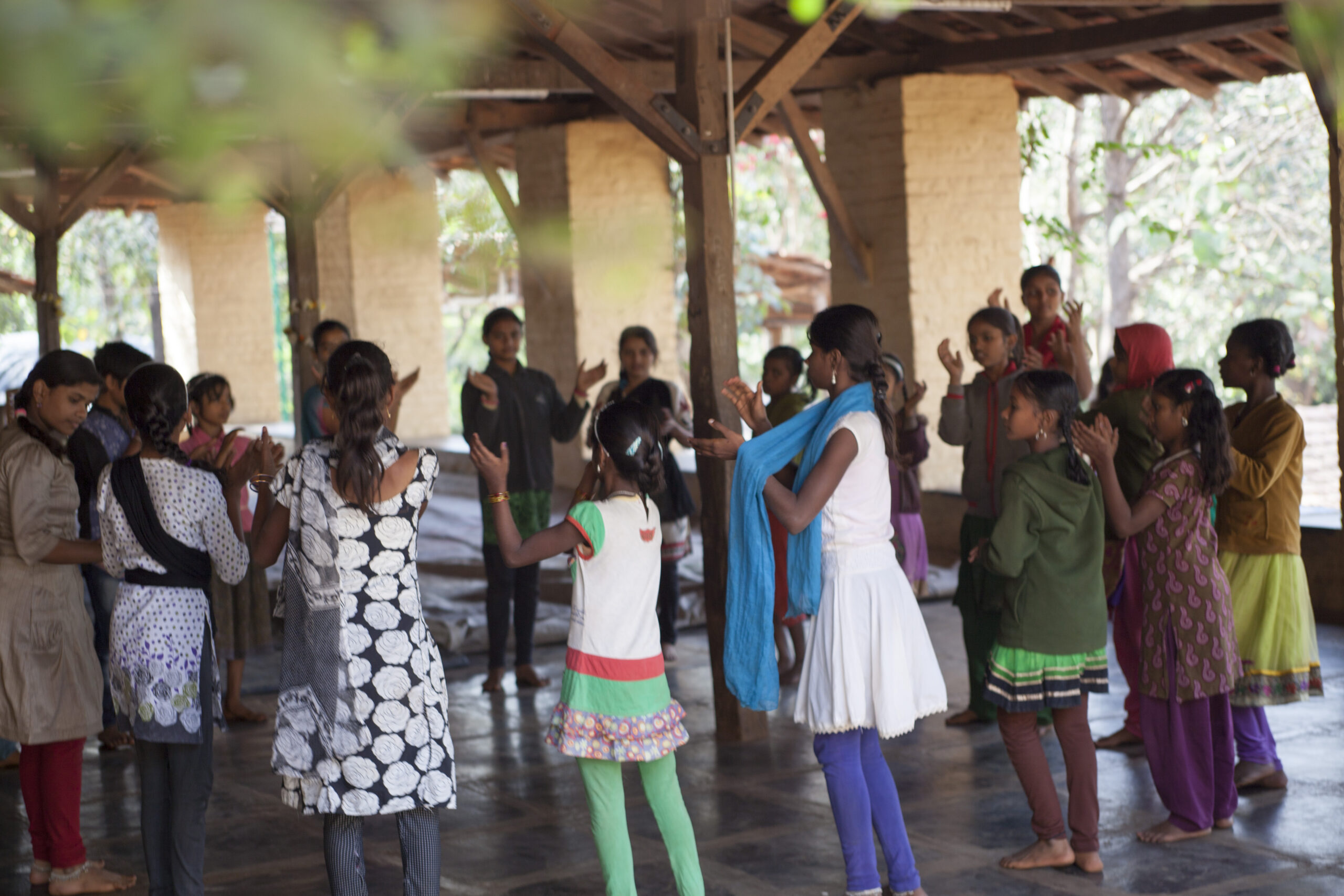
Inspired by Gandhi and moved to respond to India’s 1967 famine, Bunker Roy moved from the affluent suburb where he grew up to Rajasthan, India, to help rural villagers improve their lives. The organization he founded in 1972, Social Work and Research Centre, came to be known as “Barefoot College” because its clients are poor, rural, often semiliterate villagers. Communities from all over India have sent representatives to work and study to become “barefoot” health workers, teachers and engineers. Once they return to their villages, they use their knowledge of water engineering, solar power, income generation, medicine and other topics to improve their own communities. Some launch their own Barefoot Colleges. The organization has trained 750 technicians—women, dropouts and unemployable youths—in remote villages in 13 Indian states over the past 30 years through a self-help model that respects local knowledge and capability and promotes local organizations to make community decisions. Skoll’s grant will help Barefoot College bring the “Barefoot Approach” to 30 communities in five countries. Bayview Hunters Point Center for Arts and Technology (BAYCAT)
The success of Bill Strickland’s Manchester-Bidwell Corp inspired the creation of the Bayview Hunters Point Center for Arts and Technology (BAYCAT). The center educates and inspires underserved youths and adults to become productive citizens and improve the quality of life for themselves and their communities though education, arts, culture and enterprise. BAYCAT operates in a section of San Francisco where 60 percent of working-age men are unemployed and the poverty rate is 22 percent, twice the city’s rate. The percentage of students performing at or above proficient levels averages about 10 percent for all grades. In 2004, BAYCAT served youths and adults with programs in filmmaking and creative writing. Skoll funding will help BAYCAT expand and serve more youths and adults, under the leadership of Executive Director Villy Wang. CAMFED
During a trip to Zimbabwe in 1990, Ann Cotton realized that Africa would never conquer poverty and disease unless its women were educated. She found that families that could not afford to educate all their children would give priority to boys. She knew that educated women are less likely to contract HIV/AIDS, and that they marry later and have fewer children who are healthier and more likely to go to school. She launched CAMFED (Campaign for Female Education) in 1993. By selling baked goods, she raised enough money to send 32 girls to school, and she has since built the organization to support 68,290 children in school. It reached more than 480,000 community members through various initiatives in 2004 alone. CAMFED works with groups of girls who encourage one another to stay in school, get jobs, start businesses and become leaders in their communities. The organization has implemented its program in more than 30 districts in Zimbabwe, Ghana, Zambia and Tanzania and is poised to expand to other countries. Skoll funding will help CAMFED open 21 new district centers, develop training programs to support replication, promote national-level initiatives to support girls’ education and hire additional staff. Citizen Schools
Eric Schwarz’s vision for Citizen Schools is to re-engage citizens with their schools and create learning opportunities that will change the trajectory of low-income youths, preparing them for academic achievement, high school completion and college access. With Ned Rimer, he led Citizen Schools in developing after-school, Saturday and summer apprenticeship programs for disadvantaged children ages 9 to 14, transforming out-of-school time into enriching learning experiences. Founded in Boston in 1995, Citizen Schools now operates programs in 13 cities and serves 1,568 children annually. Its curriculum emphasizes hands-on learning, discovering, skill building, leadership, teamwork and fun. According to an external evaluation, 70 percent of eighth graders in the Citizen Schools academy program select top-tier, college-track high schools in Boston, compared to only 46 percent in a comparison group. With help from Skoll, the organization will expand its programs to serve 6,000 students at 50 program sites and will continue to perfect its replication model. Committee for Democracy in Information Technology (CDI)Rodrigo Baggio founded a successful technology consulting company while still in school in Rio de Janeiro. Eager to erase the digital divide and help disadvantaged people use technology to improve their communities and their lives, he created the first citizens’ rights and technology school in a Rio slum in 1995. The nonprofit organization he formed, the Committee for Democracy in Information Technology (CDI), now supports more than 900 schools in 20 Brazilian states, 11 other Latin American countries, South Africa and Japan. Students learn how to use computers and software while discussing issues of interest to their community, then decide on a group project that incorporates technology, such as publishing a community newspaper, launching a small business or organizing a civic group. More than 600,000 individuals have graduated from CDI’s schools. Skoll’s support will help CDI develop capacity to support 1,000 additional schools, and enhance communications and quality control. EcoLogic Finance
William Foote was an investment banker during the Latin American growth years of the early 1990s. After the peso was devalued in 1994, he spent two years in rural Mexico studying and writing about the financial crisis and its effects on rural people and the environment. Many were forced by economic desperation to support themselves in ways that damaged the environment, such as deforestation, slash-and-burn farming and overharvesting of wildlife resources. He developed a lending model that helps farmers transition to “green” production. He founded EcoLogic to provide loans of between $25,000 and $500,000 to small- and medium-size enterprises targeting sustainable agriculture and fisheries, wild-harvested products, certified wood and ecotourism. Since EcoLogic launched in 1999, it has raised more than $8 million in low-interest loan capital from 50 private investors and has made 125 loans valued at more than $18 million to rural producers in nine Latin American and three African countries. EcoLogic has a 98 percent repayment rate. Skoll funding will help EcoLogic make 60 new loans, increasing income for 90,000 people and improving management of 75,000 acres of land in both Latin America and Africa. Fundación Paraguaya
After studying in Spain and the United States, Martin Burt returned to Paraguay in 1985 and started an innovative microcredit program. Fundación Paraguaya has supported 30,000 microentrepreneurs who have created 19,000 new jobs. Its Junior Achievement program has helped build the entrepreneurial skills of more than 50,000 young people. Two years ago, the organization took over a bankrupt agricultural school and turned it into a model enterprise that helps young people learn to think of themselves not as “poor campesinos” but as “rural entrepreneurs.” With funding from Skoll, the organization will educate 120 students each year and help them apply their skills on family farms. It will also work with at least 45 more schools, including eight that will copy the entire model. Institute for OneWorld Health
In 2000 Victoria Hale launched the Institute for OneWorld Health, a nonprofit pharmaceutical company that develops drugs and vaccines for diseases that primarily affect developing countries. Although infectious diseases account for only 10 percent of deaths in developed countries, they cause 60 percent of deaths among the world’s poorest people. OneWorld intends to bring drugs to market at costs affordable to poor people and countries. It has set up a manufacturing and marketing collaborative to begin production of its first drug, which will treat visceral leishmaniasis, a fatal tropical disease transmitted by insect bites that currently afflicts 1.5 million. Skoll funds will help OneWorld develop its managerial infrastructure, with the goal of getting five drug development programs in process by 2008. International Development Enterprises (India)
Amitabha Sadangi’s vision is to empower the rural poor with affordable, sustainable agricultural technologies. He has been a leader in creating an Indian strategy and organization to disseminate technologies developed by International Development Enterprises (India). Foot treadle irrigation pumps and low-cost drip systems introduced by IDE (India) have helped 400,000 families double their income, a net gain of more than $40 million per year. A signature element of the IDE (India) strategy is a “supply chain” of local manufacturers, distributors and installers who earn $1 million annually. IDE (India) has sold irrigation systems to the poorest families for as little as $1, enabling them to have more food and earn more money and, thus, afford better health care and education. The organization will use Skoll funds in combination with funds from other donors to enable 250,000 more small farmers to have access to affordable irrigation systems that would create $184 million in new wealth by 2007 and would generate $15 million more income to entrepreneurs in the supply chain. KickStart (formely ApproTEC)
Martin Fisher and Nick Moon founded Appropriate Technologies for Enterprise Creation (ApproTEC) in 1991 and renamed it KickStart in 2005. The organization promotes sustainable economic growth and employment by developing and promoting technologies that can be used to run profitable small-scale enterprises. Working in developing countries in Africa, KickStart introduced low-cost, human-powered irrigation pumps that enable farmers to grow more crops and sell produce in the dry season, when prices are high and supply is low. Since its inception, KickStart has helped farmers start 36,000 new businesses in Kenya, Tanzania and Mali that collectively generate more than $38 million in new profits and wages per year. The new revenues are equivalent to 0.5 percent and 0.2 percent of the Gross Domestic Product of Kenya and Tanzania, respectively. Skoll funding will help KickStart strengthen its operations, develop two new products and reach 50,000 more clients. Manchester Bidwell Corp.
Manchester Bidwell Corporation is a nonprofit organization that provides a variety of services and programs centered on youth development through its affiliate, the Manchester Craftsmen’s Guild, and on job training through its other affiliate, the Bidwell Training Center. Since the late 1990s, Manchester Bidwell Corporation has become a destination point for those interested in arts education, vocational training and community development, and many communities have expressed an interest in replicating the Pittsburgh center. Two replications are already under way; Bayview Center for Arts and Technology and the Cincinnati Center for Arts and Technology. Rugmark Foundation USA
Rugmark International was founded in 1994 to eliminate child labor in carpet manufacturing. In Nepal, Pakistan and India, the organization monitors factories, certifies carpets made without child labor, and rescues and educates child laborers. In consumer countries, it seeks to create market preference for certified rugs. In 1999 Nina Smith became the first executive director of Rugmark Foundation USA. Imports of certified rugs now represent 1 percent of the U.S. market. Her goal is to bring that market share to 15 percent, which could result in the rescue of thousands of children from forced labor and the preservation of jobs for adults. With help from Skoll, Rugmark Foundation USA hopes to increase the market share of certified rugs to 5 percent by 2007. Sonidos de La Tierra
The eighth child of struggling farmers, Luis Szarán was “discovered” by a prominent musician and was given the opportunity to study music with master teachers in Europe. He founded Sonidos de La Tierra (Sounds of the Land) in early 2002 in Paraguay to help children from similar backgrounds have opportunities like his own. He says, “Young people who play Mozart by day do not break windows at night,” and likes to point out that singing or playing in a musical ensemble imparts discipline, self-esteem and teamwork. He has helped residents of 18 communities establish philanthropic societies, work together to improve the future of their children and directly benefit 1,700 young people. The project also supports three studios where artisans learn to construct and repair instruments, and is engaging students and teachers in reviving and documenting the traditional music of Paraguay. Skoll funds will support scaling from 18 to 60 communities over three years. TransFair USA
Paul Rice founded TransFair USA in 1998 to build a more equitable and sustainable model of international trade that benefits producers, consumers, industry and the earth. TransFair USA helps small family farmers in developing countries consolidate their power through 65 cooperatives in 48 countries. By certifying the products of these farmers as fair trade, it guarantees consumers that farmers have received fair compensation and that they have met minimum international employment and environmental standards in their production processes. The organization audits the entire global supply chain for its products (currently coffee, tea and cocoa) and licenses 300 companies to display its trademarked label on products in more than 25,000 locations in the United States. Since its inception, certification by TransFair USA has generated $54 million in additional income for family farmers. By 2009, the organization estimates benefits will bring $150 million per year in additional income to farmers in its network. With funding from Skoll, TransFair USA will streamline its operations, increase brand recognition and build markets, with the eventual goal of producing income that can sustain the organization’s growth over the long term. Witness
Witness was launched in 1992 with the simple goal of getting video cameras into the hands of human rights activists. One of them is Gillian Caldwell, a filmmaker and attorney who was investigating Russian prostitution rings with undercover cameras. She told Witness that advocates needed training and access to more media outlets in order to be successful. Witness hired her as executive director in 1998, and she has built the organization into a major international resource for the media and the human rights field. Working with partner groups from more than 50 countries, Witness has produced videos that have been used as evidence in legal proceedings, as testimony before United Nations commissions, for grassroots education and mobilization, and as a deterrent to further abuse. The videos have resulted in sweeping legislation to overhaul California’s juvenile justice system, an historic agreement by the government of Paraguay to reform the country’s mental health system, and prosecution of the murderers of Philippine human rights activists. Skoll funding will enable Witness to train hundreds and, over time, thousands in media advocacy. Click here to view the 2004 grantee list
|
|
||||||||||||||||||||||||||||||||||||||||||||||||||
|
|
|
Copyright © 2008 Skoll Foundation. All Rights Reserved. The Skoll logo, the phrase "Uncommon Heroes. Common Good." and the name "Social Edge" are trademarks of the Skoll Foundation. |